top of page


Calcium Sulphate
Raised Floor System

Calcium Sulphare Raised floor system
Title | Property |
|---|---|
Panel dimension | 600 x 600 mm |
Thickness | 33 mm |
Top | HPL Surface Panel |
Core | Aluminum honeycomb core filled with light cement |
Calcium Sulphare Raised floor system is a type of raised flooring system that uses panels made primarily from calcium sulphate (also known as gypsum) as the core material. Here are the key points about calcium sulphate raised floors:
Type of Calcium Sulphate Panels

Stringer System
This type uses stringers - horizontal beams attached with screws to pedestals for extra support. It’s typically used for floors with finishes like high-pressure laminate, suitable for areas needing higher load capacity, like server rooms.
Benefit:
Easier and potentially cheaper to install, suitable for areas where bare floors suffice and loads are lighter, reducing overall costs.

Corner - Lock System
This type doesn’t use stringers, with panels locking together at corners. It’s used for bare floors, simpler in design, and fits standard load requirements, like in less critical office spaces.
Benefit:
Offers increased stability and load-bearing capacity, ideal for heavy traffic or equipment, and where finished, anti-static floors are needed, such as in data centers.

Both types are made from Calcium Sulphate, offering a raised platform
for managing cables and distributing air, essential for modern building
infrastructure.
Composition:
The density of calcium sulphate provides improved impact and airborne sound reduction.
Structure:
It typically has a sandwich structure with a calcium sulphate core, covered on top and bottom with galvanized steel or other materials. The edges are often sealed with PVC or ABS trim.
Fire resistance:
These floors offer excellent fire resistance, outperforming steel raised floors in high-temperature environments.
Moisture resistance:
Calcium sulphate panels have natural resistance to moisture, maintaining structural integrity in high-humidity environments.
Load capacity:
Due to their density and strength, these panels can support heavier loads compared to traditional wood core panels.
Acoustic performance:
The density of calcium sulphate provides improved impact and airborne sound reduction.
Applications:
Commonly used in data centers, computer rooms, telecommunication rooms, server rooms, and other high-grade environments.
Purpose and utility.

Structure of the Panel
The panel's core is made of high-density calcium sulphate (also known as gypsum), which provides excellent load-bearing capacity, fire resistance, and acoustic properties: The top surface finished with galvanized steel.
Galvanzied steel sheet
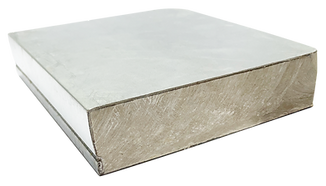
Light Cement
Installation Detail

Model | Concentrate Load | Impact Load | Ultimate Load | Uniform Load | Rolling Load (10 Times) | Rolling Load (1000 Times) |
|---|---|---|---|---|---|---|
HD 1000 | ≥ 4498 N / ≥ 1009 lbs | 670 N / 150 lbs | ≥ 13494 N / ≥ 3032 lbs | ≥ 23294 N/M² / ≥ 5235 lbs/M² | 3596 N / 807 lbs | 2959 N / 515 lbs |
HD 1250 | ≥ 5595 N / ≥ 1256 lbs | 670 N / 150 lbs | ≥ 16797 N / ≥ 3774 lbs | ≥ 33084 N/M² / ≥ 7436 lbs/M² | 4498 N / 1009 lbs | 3596 N / 807 lbs |

*Tested by the world's leading Testin, Inspection and Certification
SGS S.A.
bottom of page